

Climate risk in Daejeon
Daejeon, South Korea · 1.5M people in the urban area
What threatens Daejeon most
- Water stress
- High WRI Aqueduct
- Drought
- Medium-High WRI Aqueduct
- Cyclone wind
- Category 1 once in 100 years IRIS
Tsunamis and landslides are not rated for a single city here. Climate risk profile of South Korea
Daejeon had 19 days with 20 mm of rain or more in 2025.
Seoul: 21 days.














Daejeon's climate in the 2050s
2041-2060 compared with 1991-2020, moderate emissions
By the 2050s, Daejeon is projected to have the climate that Gwangju (South Korea) has today.
+1.7°C
Mean temperature over the year
+1.7°C
Highest in the warmest month
+1.5°C
Lowest in the coldest month
+4%
Precipitation over the year
Under high emissions, Daejeon would have the climate that Gwangju (South Korea) has today.
Share this comparison
How close the match is: 0.6 σ to the climate of Gwangju today, where under 2 is close and over 4 is no match (Mahony et al. 2017). 3 of 3 climate model runs name the same city. Seasonal temperature and rain are compared, not extremes, city heat or the sea.
Where else Daejeon stands out
+2.4°C
Warming by 2050, moderate emissions
Seoul: +2.8°C.
Higher than in 80% of the world's 630 large cities
Hazards at Daejeon
Read at the city's centre and compared with the Atlas's 630 large cities. Moderate emissions is the IPCC's scenario SSP2-4.5.
| Hazard | Daejeon | Among large cities | In South Korea |
|---|---|---|---|
| Hot days in 2025, over 35 °C | 5 days | Among large cities: above 51% | In South Korea: 6 of 9 |
| Tropical nights in 2025, over 20 °C | 85 days | Among large cities: above 43% | In South Korea: 8 of 9 |
| Hottest day of 2025 | 36°C | Among large cities: above 48% | In South Korea: 6 of 9 |
| Warming by 2050, moderate emissions | +2.4°C | Among large cities: above 80% | In South Korea: 4 of 9 |
| Days with 20 mm of rain or more in 2025 | 19 days | Among large cities: above 82% | In South Korea: 3 of 9 |
| River flood depth, 100-year event | Dry at the city centre point | ||
| Coastal flood depth, 100-year event | Dry at the city centre point | ||
| Water stress | High (40-80%) | Among large cities: above 56% | In South Korea: 1 of 8 |
| Drought risk | Medium-High | Among large cities: above 13% | In South Korea: 1 of 8 |
| Earthquake shaking, once in 475 years | 0.4 m/s² | Among large cities: above 39% | In South Korea: 2 of 9 |
| Land burned in an average year | 0% | ||
| Cyclone wind, once in 100 years | 40.25 m/s |
Flood depth is read in a single 1 km cell at the city's centre, in today's climate. Other parts of the city can still flood. The country page names the deepest point near a coastal city in 2080, so its figure can be higher. See how deep a river flood reaches around Daejeon on the live map
See the warming around Daejeon on the live map


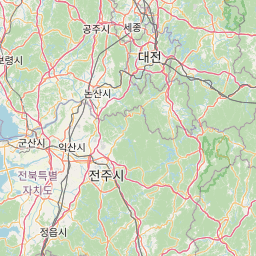

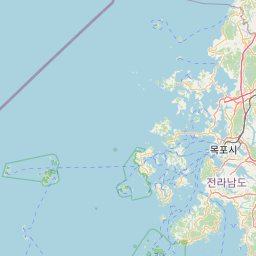
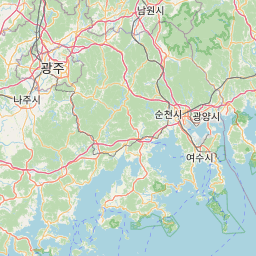
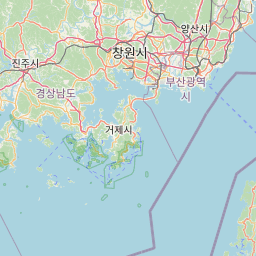














 +2.4°C © OpenStreetMap
Cite or embed
Cite this page
In a line
Source: Criora (criora.com), based on ECMWF, NEX-GDDP-CMIP6, WRI, IPCC, GSHAP, GFED500, IRIS: the Imperial College Storm Model dataset
APA
Criora. (2026). Daejeon, South Korea: climate risk profile [Data set]. Retrieved November 2, 2026, from https://criora.com/atlas/KOR/daejeon BibTeX
@misc{criora_atlas_KOR_daejeon_2026,
  author = {{Criora}},
  title = {Daejeon, South Korea: climate risk profile},
  year = {2026},
  url = {https://criora.com/atlas/KOR/daejeon},
  urldate = {2026-11-02}
} Each reading stays under its source's terms; the sources are named on this page.
Embed on your site
<iframe src="https://criora.com/embed/atlas/KOR/daejeon" title="Daejeon, South Korea: climate risk, by Criora" width="100%" height="140" loading="lazy" style="max-width:420px;border:0"></iframe>
<p><a href="https://criora.com/atlas/KOR/daejeon?ref=embed" rel="nofollow">Source: Criora</a></p>
Free, no account needed. The widget has no script and shows the figures of this page. Keep its link to the source.