Post-mortems
When Criora tells a reader something false, this page says what happened and what was changed. An entry stays here once it is written.
False Critical events from one sensor or one hot pixel
Found in October 2026.
What readers saw
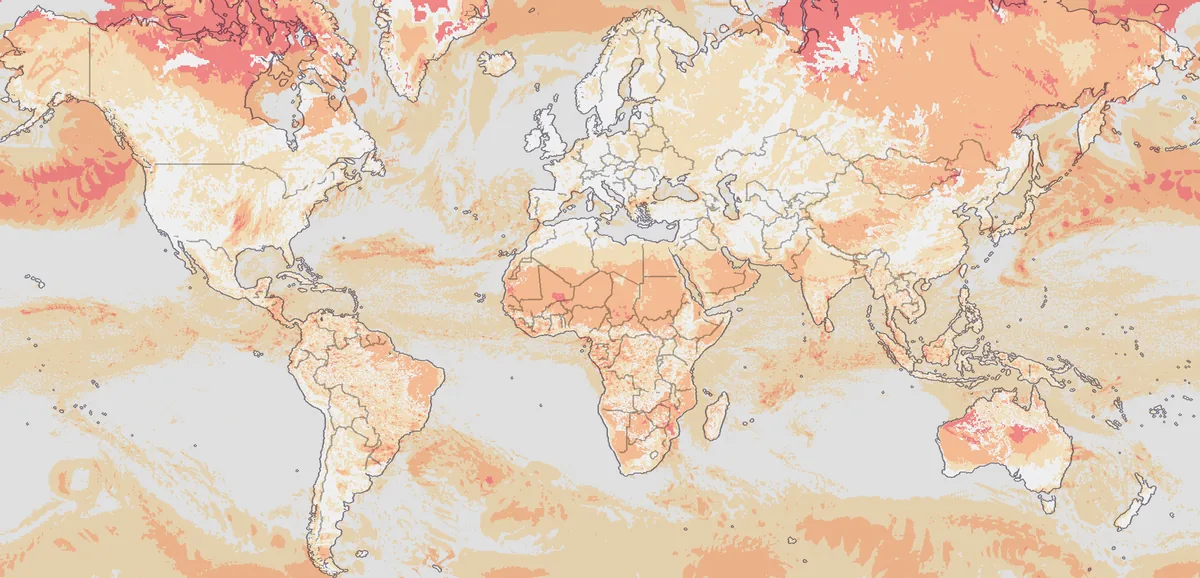
- On one October day the world list held 101 Critical events. 44 of them stood on a single sensor or a single satellite detection: 31 air sensors and 13 fire clusters.
- A steel mill in the United States was listed as a wildfire: one satellite pixel read 14,636 MW and its nine neighbours 1 to 3 MW.
- A sensor in Cork, Ireland, reported fine particles at 218 µg/m³ while the national agency’s station read under 10.
- The summit eruption of Kilauea was listed as a wildfire.
Why it happened
A satellite sees heat and cannot say what is hot, and Criora treated every detection as a fire. One reading from one air station could set the highest class. Nothing compared either with a second source, and an AI assistant repeats such an answer as fact.
What changed
- A fire seen only by satellite no longer reaches High or Critical on that reading.
- Air quality now comes from the CAMS service of Copernicus and from the US EPA’s AirNow. A reading nothing else confirms stays below High.
- Each event says how well it is confirmed, and shows the issuer’s own level beside Criora’s rank. See Criora Severity.
- These cases are checked before every release, so the same mistake cannot return unnoticed.
The same day read on the new method holds one Critical event in the world.
What this does not fix
A real fire that only a satellite has seen now ranks low until a service or a report confirms it. Criora accepts that delay, because a false Critical costs more trust than a late one. It is a choice, and it can be wrong on a given day.