

Climate risk in Miami
Florida, United States of America · 5.6M people in the urban area
What threatens Miami most
- Cyclone wind
- Category 2 once in 100 years IRIS
- Water stress
- Low-Medium WRI Aqueduct
- Drought
- Low-Medium WRI Aqueduct
Tsunamis and landslides are not rated for a single city here. Climate risk profile of United States of America
The sea at Miami is projected to rise 290 mm by 2050 under moderate emissions.
New York: 346 mm.








Miami's climate in the 2050s
2041-2060 compared with 1991-2020, moderate emissions
By the 2050s, Miami's climate will still be more like its own today than any other large city's. The nearest other is Havana (Cuba).
+1.1°C
Mean temperature over the year
+1.3°C
Highest in the warmest month
+0.9°C
Lowest in the coldest month
0%
Precipitation over the year
Under high emissions, Miami would stay nearest its own climate today.
Its own climate today is 3.8 σ away. How close the match is: 6.5 σ to the climate of Havana today, where under 2 is close and over 4 is no match (Mahony et al. 2017). 3 of 3 climate model runs name the same city. Seasonal temperature and rain are compared, not extremes, city heat or the sea.
Where else Miami stands out
295 days
Tropical nights in 2025, over 20 °C
New York: 56 days.
Higher than in 86% of the world's 630 large cities
Hazards at Miami
Read at the city's centre and compared with the Atlas's 630 large cities. Moderate emissions is the IPCC's scenario SSP2-4.5.
| Hazard | Miami | Among large cities | In United States of America |
|---|---|---|---|
| Hot days in 2025, over 35 °C | 0 days | ||
| Tropical nights in 2025, over 20 °C | 295 days | Among large cities: above 86% | In United States of America: 2 of 51 |
| Hottest day of 2025 | 32.3°C | Among large cities: above 17% | In United States of America: 44 of 51 |
| Warming by 2050, moderate emissions | +1.9°C | Among large cities: above 43% | In United States of America: 48 of 51 |
| Days with 20 mm of rain or more in 2025 | 14 days | Among large cities: above 67% | In United States of America: 12 of 51 |
| River flood depth, 100-year event | Dry at the city centre point | ||
| Coastal flood depth, 100-year event | Dry at the city centre point | ||
| Sea level rise by 2050, moderate emissions | 290 mm | Among large cities: above 89% | In United States of America: 11 of 19 |
| Water stress | Low-Medium (10-20%) | Among large cities: above 30% | In United States of America: 27 of 48 |
| Drought risk | Low-Medium | Among large cities: above 1% | In United States of America: 17 of 48 |
| Earthquake shaking, once in 475 years | 0.05 m/s² | Among large cities: above 4% | In United States of America: 51 of 51 |
| Land burned in an average year | 0% | ||
| Cyclone wind, once in 100 years | 45.76 m/s |
Flood depth is read in a single 1 km cell at the city's centre, in today's climate. Other parts of the city can still flood. The country page names the deepest point near a coastal city in 2080, so its figure can be higher. See how deep a river flood reaches around Miami on the live map
See the tropical nights around Miami on the live map

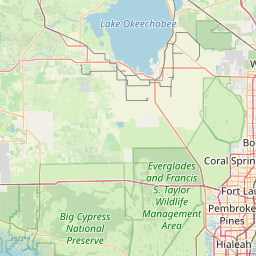









 295 days © OpenStreetMap
Large cities near Miami
- Fort Lauderdale · United States of America
- West Palm Beach · United States of America
- Orlando · United States of America
- Tampa · United States of America
Large cities in United States of America
- New York
- Los Angeles
- Chicago
- Philadelphia
- Dallas
- Atlanta
- Boston
- Houston
- Washington D.C.
- Detroit
- Phoenix
- San Francisco
- Seattle
- Irvine
- San Diego
- Minneapolis
- Tampa
- Denver
- Baltimore
- St Louis
- Fort Lauderdale
- Long Beach
- Cleveland
- Portland
- Pittsburgh
- Las Vegas
- San Bernardino
- San Jose
- Cincinnati
- Sacramento
- Oakland
- Virginia Beach
- San Antonio
- Kansas City
- Fort Worth
- Indianapolis
- Milwaukee
- Orlando
- Providence
- Columbus
- West Palm Beach
- Raleigh
- Austin
- Birmingham
- Mesa
- Memphis
- Norfolk
- Bridgeport
- Buffalo
- Jacksonville
Cite or embed
Cite this page
In a line
Source: Criora (criora.com), based on ECMWF, NEX-GDDP-CMIP6, WRI, IPCC, GSHAP, GFED500, IRIS: the Imperial College Storm Model dataset
APA
Criora. (2026). Miami, United States of America: climate risk profile [Data set]. Retrieved November 2, 2026, from https://criora.com/atlas/USA/miami BibTeX
@misc{criora_atlas_USA_miami_2026,
  author = {{Criora}},
  title = {Miami, United States of America: climate risk profile},
  year = {2026},
  url = {https://criora.com/atlas/USA/miami},
  urldate = {2026-11-02}
} Each reading stays under its source's terms; the sources are named on this page.
Embed on your site
<iframe src="https://criora.com/embed/atlas/USA/miami" title="Miami, United States of America: climate risk, by Criora" width="100%" height="140" loading="lazy" style="max-width:420px;border:0"></iframe>
<p><a href="https://criora.com/atlas/USA/miami?ref=embed" rel="nofollow">Source: Criora</a></p>
Free, no account needed. The widget has no script and shows the figures of this page. Keep its link to the source.